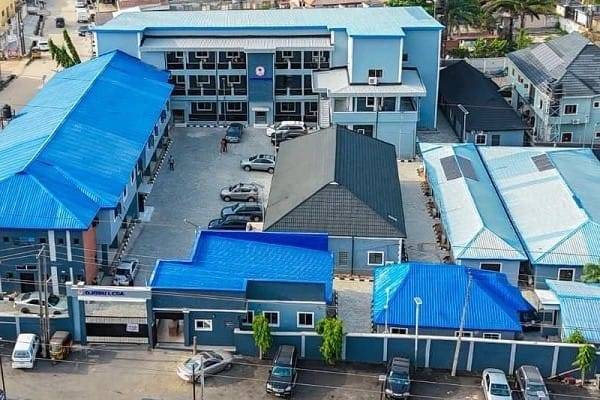
Across Nigeria, discussions about development often focus on the federal and state governments. Yet, local governments remain the tier of government closest to the people and are uniquely positioned to deliver projects that directly improve the lives of citizens. The impressive facility shown above, constructed by a local government administration, serves as a powerful reminder of what is possible when visionary leadership meets purposeful investment.
This is not about competition among local governments. It is about inspiration.
For decades, many local government councils have been associated primarily with salary payments, routine administration, and minor community projects. While these responsibilities remain important, there is growing evidence that local governments can achieve much more when they adopt a long-term development mindset.
Infrastructure such as administrative complexes, skill acquisition centers, health facilities, markets, technology hubs, tourism centers, and modern civic buildings create lasting value that extends far beyond the tenure of any chairman. They become assets that future generations can inherit and utilize.
The facility in the image demonstrates several important principles of local government development. First, it shows that local governments can think big. Second, it proves that public funds can be transformed into visible, measurable assets. Third, it sends a message to citizens that government can build institutions rather than merely manage day-to-day operations.
Across the Niger Delta, this lesson is particularly important.
The region is blessed with enormous natural resources, strategic waterways, fertile land, and a vibrant population. Yet many local government headquarters still operate from outdated facilities that limit efficiency and reduce public confidence. Imagine the impact if every local government in the Niger Delta embarked on a deliberate program of infrastructure renewal.
A modern council secretariat can improve service delivery. A well-equipped vocational center can train hundreds of youths annually. A digital innovation hub can nurture entrepreneurs and create employment opportunities. A modern market can boost local commerce. A tourism and cultural center can preserve heritage while attracting visitors and investment.
Such projects should not be viewed as mere buildings. They are economic catalysts.
When a local government undertakes a major construction project, local artisans, engineers, suppliers, transport operators, and laborers benefit from the economic activity. Once completed, the facility continues to generate value through employment, improved services, and enhanced business opportunities.
Importantly, development does not always require enormous budgets. What matters most is planning, transparency, prioritization, and continuity. A local government may not be able to build everything at once, but it can develop a clear vision and execute projects in phases.
The most successful councils are often those that identify a signature project capable of transforming their local economy. In one area, it may be agriculture. In another, tourism. Elsewhere, education, healthcare, technology, or commerce may provide the greatest opportunities.
The key is to build assets that solve real problems while creating opportunities for growth.
Local governments should also actively collaborate with state governments, development agencies, host community development trusts, private investors, and community organizations. Partnerships can significantly expand the scale and impact of projects while ensuring sustainability.
Citizens, too, have a role to play. Communities should encourage and support development-oriented leadership while demanding accountability and proper maintenance of public assets. A well-constructed facility loses its value if it is not properly managed and maintained.
The future of Nigeria's development cannot rest solely on Abuja or state capitals. It must also be driven from the grassroots. Every local government possesses unique opportunities that can be transformed into tangible progress through vision, commitment, and strategic investment.
The facility shown here stands as more than a building. It is a statement that local governments can be builders of institutions, creators of opportunities, and drivers of economic transformation.
It is important to acknowledge that several local government chairmen across the Niger Delta have, over the years, demonstrated remarkable commitment to grassroots development through the construction of modern administrative complexes, roads, markets, health facilities, educational infrastructure, and other public assets. Their efforts have shown that local governments can be more than administrative centers—they can serve as engines of economic growth and community transformation.
These leaders deserve commendation for embracing a development-focused approach that leaves lasting benefits for their people. Their achievements provide valuable examples for others and reinforce the belief that meaningful development can begin at the local level when vision, prudence, and commitment are combined.
If more local governments across Nigeria—especially throughout the Niger Delta—embrace this approach, the result will be stronger communities, more jobs, improved public services, and a more prosperous future for all. Development begins where the people are, and that place is the local government.