The OML 13 Host Communities Development Trust (HCDT) has officially unveiled a comprehensive Needs Assessment Report designed to serve as the blueprint for development initiatives across its host communities in Akwa Ibom State.
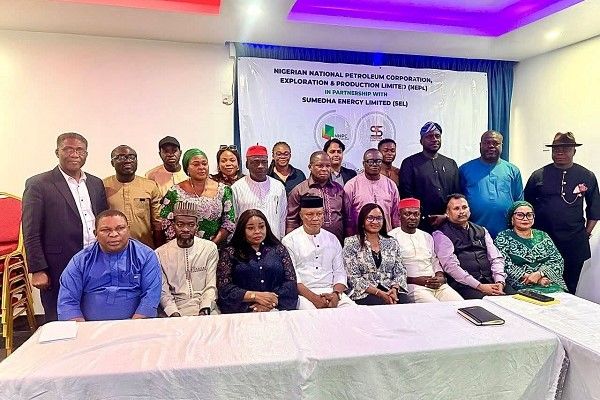
The report was presented during a stakeholders' engagement held in Uyo on Monday, attracting representatives from regulatory agencies, petroleum industry operators, community leadership, and members of the Trust's Board of Trustees.
The OML 13 asset is jointly operated by NNPC Exploration and Production Limited (NEPL) and Sumedha Energy Limited (SEL). Both companies have continued to work together under the framework of the Petroleum Industry Act (PIA) to ensure that development investments within their host communities are based on clearly identified priorities rather than assumptions.
Chairman of the Board of Trustees of the OML 13 HCDT, Barrister Ekpris Urujzian, described the newly released report as an important planning document that captures the developmental concerns and aspirations expressed by residents during the assessment process. According to him, the findings will provide direction for future interventions and ensure that projects implemented by the Trust respond directly to the needs of the people.
Providing an overview of the document, Board member Engr. Festus Sunday explained that the assessment spans 624 pages and offers a detailed analysis of development challenges and opportunities across the Trust's eleven host local government areas. He noted that the exercise was commissioned by NEPL and Sumedha Energy Limited as part of their commitment to implementing the Host Community provisions of the Petroleum Industry Act.
He stated that extensive field consultations, stakeholder engagements, and community interactions formed the basis of the report, ensuring that the recommendations accurately reflect local realities.
Among the major priority areas identified are improvements in healthcare services, education, water supply and sanitation, road and community infrastructure, youth empowerment, skills development, livelihood enhancement, and environmental protection.
Representing the Nigerian Upstream Petroleum Regulatory Commission (NUPRC), Adeniji Titilayo commended the Trust, its partners, and participating communities for completing what she described as a significant milestone in the implementation of the Petroleum Industry Act.
She observed that the report provides an evidence-based framework for planning development interventions while reinforcing the objectives of the PIA, which seeks to foster sustainable development, strengthen relationships between petroleum operators and host communities, and promote long-term social and economic prosperity.
Titilayo encouraged the leadership of the Trust to move beyond documentation by translating the recommendations into practical projects capable of improving living standards across the benefiting communities. She stressed that transparency, accountability, continuous stakeholder engagement, and effective project monitoring would be essential to achieving the desired outcomes.
She also reaffirmed the commitment of the NUPRC to continue providing regulatory oversight to ensure that the provisions of the Petroleum Industry Act are faithfully implemented and that host communities receive the benefits intended under the legislation.
Speaking on behalf of NNPC Exploration and Production Limited, the Deputy Chief Operating Officer for OML 13, Auwal Ya'u, reiterated the company's commitment to supporting the objectives of the Trust. He assured stakeholders that NEPL would meet its obligations and timelines to facilitate the timely release of funds for approved development projects.
Also speaking, Susan Bassey, Manager of Community Security, described the completion of the needs assessment as the result of months of collaboration among multiple stakeholders. She expressed satisfaction that the process had culminated in a document capable of guiding meaningful and sustainable community development.
The assessment covers eleven host local government areas in Akwa Ibom State, namely Eastern Obolo, Onna, Mkpat Enin, Ikot Abasi, Eket, Esit Eket, Ibeno, Etinan, Oruk Anam, Nsit Ubium, and Urue-Offong/Oruko.
Among its key recommendations are increased investment in critical infrastructure, improved healthcare delivery, stronger educational support systems, expanded access to potable water and sanitation facilities, youth-focused entrepreneurship and empowerment programmes, environmentally sustainable projects, and the establishment of robust monitoring and evaluation mechanisms to track project implementation and impact.
Participants at the presentation agreed that translating the report into tangible improvements would require continued cooperation among the Host Communities Development Trust, petroleum operators, government agencies, regulators, development partners, civil society organizations, and the host communities themselves.
The ceremony was attended by officials of the Nigerian Upstream Petroleum Regulatory Commission, including Kingsley Etuk Ekuri of the Eket Zonal Office, senior executives from NEPL and Sumedha Energy Limited, members of the OML 13 HCDT Board of Trustees, community representatives, and other stakeholders, all of whom expressed confidence that the needs assessment would lay the foundation for more inclusive, transparent, and sustainable development across the OML 13 host communities.
At Niger Delta DevTrack, we congratulate the OML 13 Host Communities Development Trust, its Board of Trustees, and the eleven host communities on the successful completion and presentation of the Needs Assessment Report. We believe this marks a significant milestone in the implementation of the Host Community provisions of the Petroleum Industry Act and provides a credible foundation for evidence-based planning and sustainable community development.
We urge the host communities to manage the funds available through the Trust wisely by prioritizing projects that deliver lasting social and economic benefits. We also encourage them to work closely with their respective local government councils, state and federal government agencies, development partners, non-governmental organizations, and the private sector to leverage additional technical and financial resources.
Through such collaboration, the available funds can be amplified to deliver larger, higher-impact projects that will accelerate sustainable development and improve the quality of life across the OML 13 host communities.