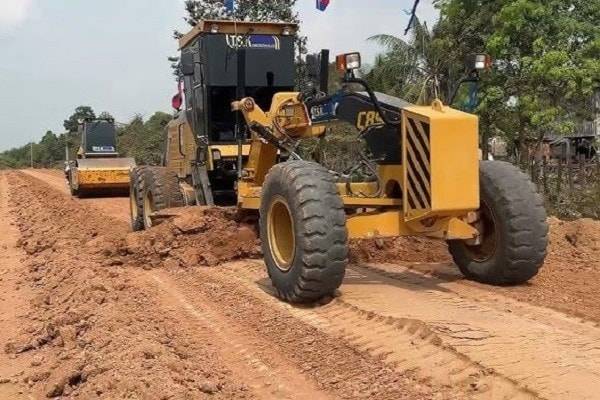
Road infrastructure remains one of the most visible indicators of development in any society. It determines how easily farmers transport produce to markets, how businesses move goods and services, how children access schools, and how communities connect with healthcare facilities and economic opportunities. In Nigeria, roads are classified into different categories, with Trunk C roads falling under the responsibility of Local Government Councils. These roads serve as local, secondary, and feeder roads that link villages, rural communities, farms, and residential areas to larger highways and urban centers.
While Local Governments have the constitutional responsibility to construct and maintain Trunk C roads, the reality is that many councils lack the financial capacity, technical expertise, and equipment necessary to execute large-scale road projects. This challenge is particularly evident in Akwa Ibom State, where several rural communities continue to struggle with poor road networks despite significant developmental efforts by both state and local authorities.
The solution is not to shift responsibility entirely from Local Governments to the state government. Rather, it is to strengthen collaboration between both tiers of government so that resources, expertise, and development priorities can be aligned for greater impact.
One of the greatest advantages of collaboration is the pooling of resources. Most Local Government Councils operate with limited budgets that must cover salaries, sanitation, primary healthcare support, education initiatives, security, and other administrative obligations. As a result, road construction projects often receive insufficient funding. By partnering with the state government, Local Governments can leverage additional financial support and technical assistance to undertake projects that would otherwise be impossible.
Such partnerships can also prevent duplication of efforts and ensure better planning. There have been instances where different levels of government pursue infrastructure projects independently without sufficient coordination. This can lead to situations where some communities receive overlapping interventions while others remain neglected. A coordinated development strategy would allow both state and local authorities to prioritize projects based on actual needs and long-term economic benefits.
The agricultural sector provides perhaps the strongest argument for enhanced collaboration. Akwa Ibom's rural economy depends heavily on farming, fishing, and related activities. Farmers may produce abundant crops, but without reliable feeder roads, transporting those products to markets becomes difficult and expensive. Poor roads increase transportation costs, lead to post-harvest losses, and reduce farmers' incomes. When Local Governments and the state government work together to improve rural road networks, they are not merely building roads—they are investing in food security, economic growth, and poverty reduction.
Collaboration also improves construction quality and sustainability. State governments typically possess greater access to engineering expertise, project management systems, and quality control mechanisms. When these resources are shared with Local Governments, roads are more likely to be built to higher standards and maintained properly. This reduces the costly cycle of repeated repairs and reconstruction that often characterizes poorly executed projects.
Akwa Ibom has made commendable progress in infrastructure development over the years, earning recognition for its investments in roads and public facilities. However, the next phase of development requires a more integrated approach. Local Governments possess intimate knowledge of the needs of their communities, while the state government has broader planning capacity and greater resources. Combining these strengths creates a powerful framework for sustainable development.
Ultimately, citizens do not concern themselves with whether a road falls under state or local jurisdiction. What matters to them is whether the road is passable, safe, and capable of supporting economic activities. Development should therefore be viewed as a shared responsibility rather than a competition between tiers of government.
For Akwa Ibom State to fully unlock the potential of its rural communities, stronger collaboration between Local Governments and the state government is not merely desirable—it is essential. Through partnership, coordination, and a common vision for development, the state can build road networks that connect people, stimulate economic growth, and improve the quality of life for generations to come.