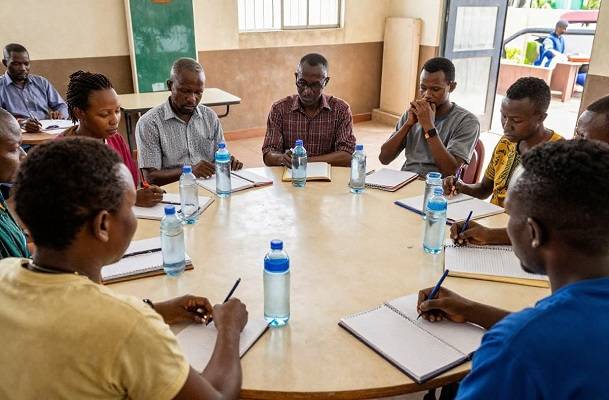
There is a dangerous habit in the Niger Delta: outsourcing blame. When institutions collapse, when funds vanish, when promises dissolve into familiar disappointment, the instinct is to look outward—toward government, contractors, or shadowy elites. But if Host Community Development Trusts (HCDTs) go the way of OMPADEC, history will record an uncomfortable truth: the communities themselves were complicit through silence, apathy, or willful blindness.
The Petroleum Industry Act did not create HCDTs as distant bureaucracies. It created them as community-owned governance structures—vehicles for self-determination, not extensions of the old patronage system. That distinction is critical. Unlike previous interventionist bodies imposed from above, HCDTs derive legitimacy from the people they are meant to serve. If they fail, it is not just a policy failure; it is a collapse of local accountability.
OMP ADEC did not merely fail because of corruption at the top. It failed because there was no sustained, organized pressure from below. There were no systems of community-level scrutiny strong enough to challenge mismanagement in real time. The same risk now hangs over HCDTs. The difference is that this time, communities have fewer excuses.
Transparency is not a favor; it is a duty. Any HCDT that operates without radical transparency—open books, accessible reports, traceable project pipelines—is already in breach of its foundational purpose. But here is the harder truth: any community that tolerates such opacity is equally in breach of its responsibility. Corruption thrives in darkness, but darkness is maintained by collective indifference.
Radical transparency is not abstract. It is practical and measurable. Communities should know, at any given time, the total inflows into their trust, the allocation formula, the contractors engaged, the status of every project, and the administrative costs incurred. This information should not be locked in boardrooms or buried in PDFs. It should be publicly displayed, discussed in town halls, interrogated in community forums, and tracked through independent platforms.
Oversight is not a ceremonial role reserved for a few “stakeholders.” It is a civic obligation. Every youth leader, every women’s group, every local association has a role to play in demanding accountability. The absence of questions is interpreted as consent. When meetings are not called, when reports are not shared, when decisions are made in secrecy—and no one objects—that silence becomes endorsement.
There is also the issue of capacity. Communities often claim they lack the technical expertise to scrutinize financial or project data. That argument no longer holds. In today’s environment, tools for tracking, auditing, and visualizing data are more accessible than ever. Civil society organizations, civic tech platforms, and even local professionals can bridge the knowledge gap. What is required is not perfection, but intent.
The most dangerous phrase in governance is “we didn’t know.” In the context of HCDTs, not knowing is a choice. It is the result of disengagement. And disengagement has consequences. When projects are inflated, when contracts are abandoned, when funds are diverted, these are not sudden events. They are processes that unfold over time, enabled by a lack of scrutiny at every stage.
Communities must also confront internal politics. Too often, oversight is compromised by kinship, patronage, or fear of confrontation. Board members are shielded because they are “our people.” Questions are suppressed to avoid conflict. This is precisely how institutions decay. Accountability that is selective is not accountability; it is complicity.
If HCDTs succeed, they could redefine development in host communities—delivering targeted, needs-based projects with a level of efficiency that centralized systems have failed to achieve. But if they fail, the consequences will be deeper than financial loss. It will reinforce a narrative that even when given control, communities cannot manage their own development structures. That is a narrative no one should be comfortable validating.
The path forward is clear but demanding: insist on radical transparency, institutionalize community oversight, and reject any culture of silence. HCDTs are not external bodies to be criticized from a distance; they are mirrors. And if they reflect failure, the communities must have the courage to see themselves in that reflection.